October 19, 2026



 Written by Watch TV Direct
After spending years switching between live streaming services, testing them across different devices, and watching them evolve through dozens of updates, I’ve learned something most viewers never think about: a live streaming service is never truly finished.
The app you opened this morning is not the same app you opened last month. The servers behind it have been tuned. The interface has been adjusted. The way content loads on your screen has probably changed two or three times since you last noticed.
Most of these changes happen quietly. Some you feel right away. A few you might never notice at all.
This guide breaks down how live streaming services update in 2026, what those updates actually do, and how to tell whether a service is being maintained properly or just patched together.
Traditional television was simple. A signal went out, your TV picked it up, and that was the end of the conversation. Live streaming works nothing like that.
Every time you watch a stream, dozens of moving parts are working together: the encoding servers, the content delivery network, the app on your device, the operating system underneath it, and your home internet connection. When any one of those pieces changes, the service has to adapt.
In my experience, the services that survive long-term are the ones updating constantly in small ways, not the ones that go quiet for months and then push a giant overhaul that breaks everything.
There are four main reasons updates never stop:
Devices keep changing. Smart TVs release new firmware. Phones get new operating systems. App stores change their requirements. A streaming service that doesn’t keep pace stops working on half its users’ devices within a year.
Viewing habits shift. What people want to watch, when they watch, and how they navigate to it changes faster than most realize. Services that track this carefully reorganize their menus and categories to match.
Infrastructure improves. Better video codecs, smarter delivery networks, and more efficient compression methods come out regularly. Services that adopt them deliver smoother streams on the same internet connection.
Problems need fixing. Bugs, performance issues, edge cases on specific devices – these get discovered every day and patched in the background.
If you want to understand how the underlying technology works in the first place, I’ve covered the full picture in How IPTV Works Today.
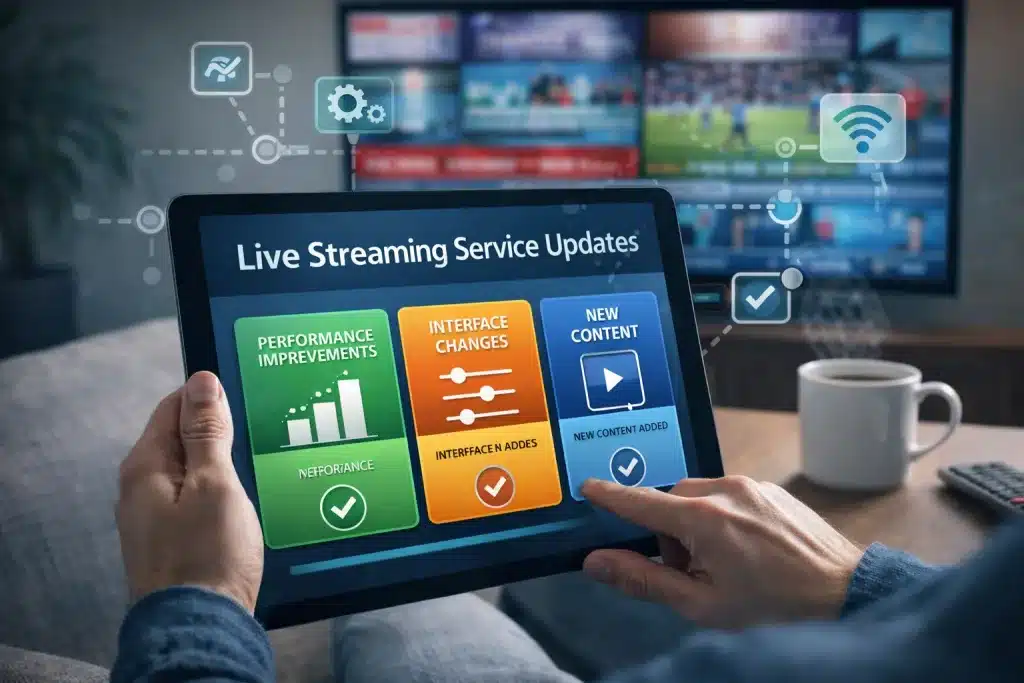
Not every update is the same. After tracking changes across multiple services for years, I’ve found they almost always fall into one of four categories.
These are the updates you feel without seeing. The app looks identical, but suddenly streams load faster, channel switching feels snappier, and that annoying buffering you got every evening at peak hours just stops happening.
Behind the scenes, the service has probably upgraded its servers, switched to a better delivery network, or adjusted how it handles your connection. I cover the full reasons streams buffer in the first place in Why Live Streams Buffer – but the short answer is that performance updates are usually targeting exactly those bottlenecks.
These are the most important updates a service can make. A platform that prioritizes them will always feel more reliable than one chasing flashy new features.
These are the updates you notice immediately. A menu moves. A button looks different. Categories get renamed.
Good services roll these changes out gradually, test them with small groups of users first, and keep the overall layout familiar. Bad services flip the whole interface overnight and leave their users hunting for features that worked yesterday.
When I evaluate a service, I pay close attention to how it handles interface changes. A platform that respects how people actually use it earns trust. One that treats its users as test subjects loses it fast.
As a streaming library grows, the way content is arranged has to grow with it. A channel list that worked fine with 500 channels becomes unusable with 5,000.
These updates reorganize categories, improve search filters, and group related content more intelligently. Nothing is being removed – the goal is making what already exists easier to find.
When a service reorganizes its content well, you notice that you spend less time searching and more time watching. When it does this badly, everything you used to find in three taps now takes seven.
This is the category most users never think about, and it’s the one that quietly determines whether your service still works next year.
Every time Samsung pushes new firmware to its Smart TVs, every time Apple updates iOS, every time Google changes the Play Store rules, streaming apps have to adapt. A service that ignores these changes stops working on those devices within months.
I’ve watched several services collapse over the years simply because they couldn’t keep up with device updates. Their apps started crashing on newer TVs, then disappeared from app stores entirely.
For a deeper look at how services maintain consistency across devices, see A Seamless Viewing Experience Across Every Screen You Own.
Most updates happen without any warning, and that’s by design. Here’s what you’ll typically experience when a well-managed service pushes an update:
A brief refresh when you open the app. A category that’s now in a slightly different place. Faster response when you tap a channel. Sometimes a small notice about a new feature, sometimes nothing at all.
What you should not experience is the app crashing, channels disappearing, or your settings being wiped. If those things happen regularly, the service is not managing its updates properly – and that’s a quality signal you should take seriously.
In my testing, the difference between a well-maintained service and a poorly maintained one becomes clearest during update cycles. The good ones feel like nothing happened. The bad ones feel like you’re using a different app every week.
Usually, updates exist to improve quality, not reduce it. Most updates target exactly the things viewers complain about: buffering, slow channel switching, poor performance on weaker connections, and inconsistent picture quality.
That said, no update is perfect. Sometimes a fix for one device introduces a small issue on another. Sometimes a server upgrade takes a few hours to settle. These temporary hiccups are normal.
What matters is the pattern. If a service has a brief issue once every few months and resolves it quickly, that’s healthy maintenance. If it has a major problem every other week, that’s poor engineering.
After testing many services across 2026, I can say with confidence that the platforms worth subscribing to handle updates so smoothly that you’d have no idea anything changed unless you were looking for it. I’ve broken down what separates the reliable services from the rest in my full guide to the Best IPTV Service in 2026.
In almost every case, the answer is no.
Modern streaming services handle updates automatically. Apps update in the background through your device’s app store. Server-side improvements happen silently while you’re not even using the app. Content reorganization appears the next time you open it.
There are a few situations where you might need to take action:
None of these are problems. They’re routine maintenance that takes thirty seconds.
This is where years of testing different platforms become useful. The pattern is always the same.
Well-managed services roll out updates gradually, test them with small user groups before pushing them widely, keep navigation consistent so users aren’t constantly relearning the interface, and prioritize performance improvements over flashy cosmetic changes. When something goes wrong, they fix it within hours, not days.
Poorly managed services do the opposite. They push major changes overnight, break compatibility with devices that worked yesterday, ignore how their users actually navigate the app, and leave bugs sitting for weeks.
The update pattern of a service tells you almost everything you need to know about its long-term reliability. A service that handles updates intelligently in 2026 will still be running smoothly in 2028. A service that handles them carelessly probably won’t.
A lot of viewers see frequent updates as a red flag. I’d argue it’s the opposite.
A streaming service that updates regularly is one that’s actively maintained, actively improving, and actively adapting to new devices and new viewing habits. A service that hasn’t pushed an update in six months isn’t stable – it’s abandoned.
The platforms I trust most are the ones I see evolving quietly in the background. New device support. Faster load times. Better organization. None of it announced loudly. All of it just there when you open the app.
That’s what good maintenance looks like.
Most well-maintained services push small updates every one to two weeks, with larger updates every few months. Performance improvements often happen on the server side daily, without requiring any app update at all.
Updates can adjust menu layouts, reorganize categories, or change how features are accessed. Good services keep these changes minimal and intuitive so you don’t have to relearn the app.
App updates typically use a small amount of data, usually under 100 MB. Server-side updates use none of your data at all because they happen on the service’s infrastructure, not your device.
Restart the app first. If that doesn’t work, restart your device. If the issue persists, check whether a newer version of the app is available in your device’s app store. These three steps resolve nearly every post-update issue.
No – usually the opposite. Frequent, small updates are a sign that a service is actively maintained. A service that hasn’t updated in months is more concerning than one that updates regularly.
Yes, and that’s actually the goal. Most performance and infrastructure updates happen entirely on the service’s servers and never require anything from your side. You just notice that things feel a little faster.
Live streaming services are not finished products. They’re living platforms that grow, adapt, and evolve with every passing month. Updates are not signs of instability – they’re signs of a team that cares enough to keep the experience working properly.
The real question is not whether a service updates. It’s how well it handles those updates. A platform that respects its viewers, tests carefully, and rolls out changes intelligently will always outperform one that doesn’t.
When you’re choosing a live streaming service, don’t just look at the channel count or the price. Look at how it’s been maintained over time. That’s the part that determines whether you’ll still be happy with your choice a year from now.
If you want to see which services are handling 2026 the best, I’ve put together my full analysis in Best IPTV Service in 2026.
More guides from our support team:
© 2026 Watch TV Direct, Inc. All rights reserved.